

How to Choose the Right Paint Finish for Every Room in Your Home
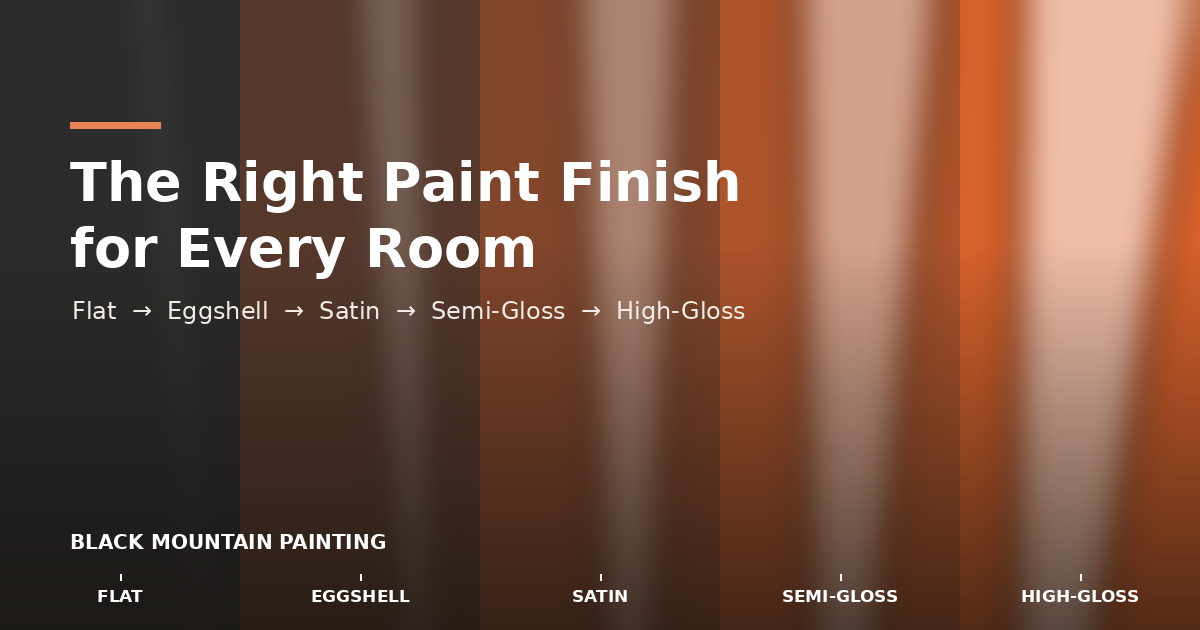
Most homeowners spend weeks agonizing over paint color and then pick a finish in about four seconds at the counter. That’s backwards. We’ve walked into plenty of homes where the color choice was perfect but the sheen was fighting it — a flat finish in a sunny kitchen that showed every grease splatter, or a high-gloss accent wall in a room with three kids and a dog that turned into a fingerprint magnet within a month.
Finish is the part of the paint job that decides how the room actually holds up. Get it right and a wall stays looking fresh for years and wipes clean in seconds. Get it wrong and you’re repainting sooner than you planned. Here’s how we walk our own customers through the decision, room by room.
Why Sheen Matters More Than the Paint Can Admits
Paint cans are labeled the same way no matter where you live, but your climate changes how a finish actually performs. Homes in humid regions deal with more moisture stress on bathroom and kitchen walls. Homes with wide seasonal temperature swings put more strain on trim and doors, where wood expands and contracts. Homes with intense, direct sun through south- and west-facing windows can see flat and matte finishes chalk or fade faster than the can’s five-year promise suggests.
None of this means you need an engineering degree to pick a sheen — it just means “what finish looks nicest” and “what finish will hold up in this specific room” aren’t always the same question. That’s one of the first things we factor in on every interior painting project we take on, and it’s worth thinking through before you open a paint chip.
Flat and Matte: Best for Ceilings and Adult-Only Spaces
Flat and matte finishes have little to no shine. Light doesn’t bounce off them, so they do an excellent job hiding drywall seams, patch work, and the kind of minor wall imperfections that show up in almost every home eventually.
The tradeoff is cleanability. Flat paint holds onto fingerprints, scuffs, and crayon marks, and scrubbing it usually burnishes a shiny patch right where you cleaned. We steer clients away from flat on walls in busy households and toward ceilings, formal dining rooms, and primary bedrooms where the walls mostly just get looked at, not touched.
A note on “modern matte”: paint manufacturers have improved matte formulas a lot in the last several years, and some premium matte lines are more washable than older flat paints. Even so, we still wouldn’t recommend it for a mudroom or a kid’s playroom — the durability gap between matte and satin is still real, even if it’s smaller than it used to be.
Eggshell: The Room-by-Room Default
Eggshell has a very slight sheen — enough to make it more washable than flat, not enough to draw attention to wall imperfections. It’s the finish we default to most often on living rooms, dining rooms, and bedrooms because it splits the difference well: forgiving on less-than-perfect drywall, but tough enough to handle the occasional wipe-down.
If you’re not sure what finish to ask for and you’re painting a general-purpose room, eggshell is a safe, proven answer.
Satin: The Workhorse Finish for Busy Households
Satin has a soft, visible glow and stands up to more contact than eggshell. This is the finish we reach for in hallways, stairwells, kids’ bedrooms, mudrooms, and family rooms — anywhere hands, shoulders, and backpacks are constantly touching the walls. It also cleans up well, which matters if you’ve got pets or young kids leaving marks at knee height.
A lot of our clients ask whether satin is “too shiny” for a bedroom. In most lighting, it isn’t — it reads as a soft glow rather than an obvious sheen, especially in Behr, Sherwin-Williams, or Benjamin Moore’s satin lines, which tend to run a bit more matte than the name suggests.
Semi-Gloss: Built for Moisture and Scrubbing
Semi-gloss resists moisture and scrubs clean, which is why it’s the standard choice for kitchens, bathrooms, trim, doors, and cabinetry. In a bathroom especially, where you get repeated humidity spikes from showers followed by dry HVAC air the rest of the day, a moisture-resistant finish earns its keep fast — regardless of which climate zone you’re in.
Semi-gloss also does a nice job making millwork pop — crown molding, baseboards, and door casings look crisper with a bit of shine against a flatter wall color. If you’re refinishing kitchen cabinetry specifically, it’s worth a look at our cabinet painting page — cabinets take more day-to-day abuse than almost any other painted surface in the house, and the prep work matters as much as the finish choice.
High-Gloss: Use It Sparingly, On Purpose
High-gloss is the showiest option — bold, reflective, and unforgiving. It photographs beautifully on a front door or a piece of trim, but it also magnifies every brush stroke, drywall imperfection, and prep mistake underneath it. This is the one finish where we tell homeowners: don’t DIY it if you want it to look intentional rather than uneven. High-gloss rewards careful prep and application and punishes shortcuts.
We typically recommend saving high-gloss for small, deliberate touches — a front door, a statement piece of furniture, or an accent detail — rather than full walls.
Quick Reference: Finish by Room
| Room | Recommended Finish | Why |
|---|---|---|
| Ceilings | Flat | Minimizes glare, hides seams |
| Living/Dining Room | Eggshell | Balance of washability and softness |
| Primary Bedroom | Eggshell or Satin | Low traffic, some cleanability |
| Hallways/Stairwells | Satin | High contact, needs to wipe clean |
| Kids’ Rooms | Satin | Handles marks and scuffs |
| Kitchen | Semi-Gloss | Grease and moisture resistance |
| Bathroom | Semi-Gloss | Humidity resistance |
| Trim/Doors | Semi-Gloss or High-Gloss | Durability, crisp contrast |
| Cabinets | Semi-Gloss | Withstands daily handling |
| Accent Details | High-Gloss | Bold, reflective statement |
A Word on Log Homes and Cabins
If you’re working with log or timber surfaces instead of drywall, sheen decisions work differently. Stains and clear coats carry their own sheen ratings, and factors like sun exposure, snow or rain load, and seasonal moisture swings matter far more for exterior wood than they do for interior drywall. We cover that in more depth on our staining services page if you’re dealing with log siding or timber accents.
Common Questions We Hear on the Job
Can I mix finishes in the same room?
Yes, and it’s actually standard practice. Most rooms use one finish on the walls and a higher sheen — usually semi-gloss — on trim, doors, and baseboards. The contrast in sheen helps define the architectural details even when the wall and trim are the same color.
Does a higher sheen always mean a more durable paint?
Generally yes, but the paint brand and quality matter as much as the sheen level. A premium eggshell can outperform a bargain satin. Sheen affects washability and light reflection; overall paint quality affects long-term durability, coverage, and fade resistance.
What finish hides wall imperfections best?
Flat and matte, by a wide margin. Anything with sheen — satin, semi-gloss, high-gloss — reflects light and makes bumps, patches, and uneven texture more visible. If your walls need patching, plan on that prep work before moving to a higher-sheen finish.
Is eggshell or satin better for a rental property?
Satin, in most cases. It’s more forgiving to clean between tenants and handles scuffing better than eggshell, which matters when you don’t control day-to-day wear and tear.
Getting the Finish Right the First Time
Color gets all the attention, but finish is what determines whether your paint job still looks good in three years or needs a touch-up in six months. If you’re weighing options for an upcoming project — or you’ve got a specific room giving you trouble, like a bathroom that keeps peeling or a hallway that shows every scuff — our team is happy to walk the space with you and recommend a finish based on light, traffic, and how the room actually gets used.
Contact Black Mountain Painting to schedule a consultation, or browse our full list of residential painting services to see how we approach interior projects for homeowners across the country